Business Insights That Drive Real Growth
Discover practical insights, expert opinions, and inspiring stories made for entrepreneurs. From marketing tips to leadership lessons, our blogs deliver ideas you can use right away. We also spotlight thriving businesses, sharing their journeys and wins to spark your own growth. Learn, grow, and thrive — one read at a time.
Featured Insight
How Top Leaders Scale Their Businesses
Growth Strategies
15 min readDiscover the framework used by successful entrepreneurs to achieve consistent growth.
Business Insights

🚀 CALLING AFRICAN YOUTH ENTREPRENEURS 🚀
Big opportunities are opening up across Africa 🌍The AU EU Youth Action Lab Entrepreneurship Grants worth €250,000 are now OPEN FOR PROPOSALSIf you are a young innovator building solutions that create jobs, drive innovation, and promote sustainability, this is for YOU.✨ What this means for you • Funding support for youth-led businesses• Backing from the African Union and European Union• Support for ideas solving real African challenges• A chance to scale your impact beyond bordersWhether you are in tech, agribusiness, climate, health, education, or social enterprise, this grant could be the push your idea needs ⏳ Don’t wait until deadlines rush you.📌 Learn more and apply here:https://lnkd.in/gRAQzh6TTag a young founder who needs to see this hashtag#EntrepreneurshipGrants hashtag#AfricanYouth hashtag#FundingOpportunity hashtag#YouthInnovation hashtag#GlobalGateway hashtag#AUEUYouthLab hashtag#Icanstudent Full link: (28) Post | LinkedIn

For the Love of Pets! Here’s How to Start a Pet Store
Updated on 12 December 2025 • Reading Time: 4 minutes Start Business Ideas Companion animals, or pets, are a key part of every home. From young couples adopting their first pet, to children bonding with man’s best friend and guard dogs that make their owners proud. But caring for these animals is a big responsibility, and their needs have to be met, too. That’s where pet stores come in: from nutrition to animal enrichment, they’ve got it all. So how about starting your own? Market Size and Research Approximately 45% of adults in South Africa own a companion animal. A 2024 survey indicated that 78% of these respondents are dog owners and 36% cat owners. However, many other pets such as hamsters, rabbits and fish, not to mention exotic pets, are not included in these statistics. Another source indicated that 86,4% of pet reptiles in South Africa are non-native species, meaning these animals have specialised dietary and environmental needs. This market is currently valued at USD 309,9 million with an annual growth rate of 3,8% – that’s more than R 700 million to cash in on! Choose Your Business Model Selling goods such as pet supplies can be done either online or in person, such as at markets or a brick-and-mortar store. Decide how you will run your business, as each model will require a few extra steps. Research your market. If you are going to run an e-commerce store, you will need to focus on the market you are trying to target. Is it a specific type of pet owner, such as dog owners, or perhaps only exotic pets? Is your ideal customer looking for something specific, such as eco-friendly pet products, or perhaps specialised pet nutrition? If you choose to open a physical store, you may want to consider offering a variety of products instead. Because rent and utilities are expensive, aiming to target a wider customer base to ensure you make enough sales to cover your expenses. Create a business plan that reflects what products you intend to sell and how. Include your financial projections, budget and business details. Legal Requirements for a Pet Store Every business in South Africa needs to be registered with CIPC, as well as SARS, the tax regulator. If you employ staff, you also need to adhere to all laws relating to basic employment. If you are opening a physical store, and especially if you intend to keep live animals for sale, you must familiarise yourself with municipal bylaws. These may require you to obtain additional certification that allows you to trade and keep animals. Exotic animals, for instance, also require additional permits for buying, trading and keeping of certain species. Inventory and Supplies Selling pet supplies means that you will need to find suppliers. You will not only need to obtain pricing from them, but also calculate the cost of shipping or transporting stock to your facility, be it your store or the warehouse where you keep your inventory for your online pet store. Request wholesale catalogues from various vendors to compare pricing. If you are stocking items such as pet food, you will need to order enough stock to present to your customers, but not too much so that slow-moving stock expires on your shelves. It’s also a good idea to invest in efficient inventory management systems that integrate with your point of sale system to keep track of sales and stock. This will help you keep your records in order and make reconciliation easy. Market Your Business Marketing your business is a vital step when you are new. Luckily, you have a large Arsenal of tools at your disposal. For e-commerce stores, you should expand your knowledge on SEO as this is a great way to reach new clients online, especially those searching for your type of product. Social media is also a great option regardless of operating online or a brick-and-mortar store. It can help you reach new audiences that you haven’t reached before. By understanding how to use the algorithm to your advantage, you can effectively grow your customer base. Learn about hashtags, creating content that captures the audience’s attention, as well as social selling to leverage low-cost social media marketing strategies. Additionally, you can also learn more about promoting your posts on the platform to make sure you reach specific audiences. Old school marketing tactics such as flyers, posters, newspapers or even good old pop-up stores are all good ways to make people aware of your business. Before you can employ the above strategies, you only need to build your brand by creating a brand persona, logo and establishing brand values that you will be communicating in the above materials. Create these before you set up your social media accounts and start marketing your business.\ Share that you sell pet food, pet apparel, house-training aids, grooming materials, pet carriers and furniture, enrichment toys, or care necessities for various animals, from spiders and lizards, to bunnies and dogs. By following these steps, you will be able to start your own business in no time. Other pet-related business ideas to discover include a pet grooming business and pet sitting. Written by: Maryna Steyn, Editor Maryna Steyn is a vibrant writer and editor with a passion for language. She is a published author, writer and poet who has honed her skills in journalism and editing across various industries such as learning design, lifestyle, agriculture, media, and now, business. She believes in life long learning and has obtained multiple certifications in learning design, design and writing since completing her BA degree in Communication Science from UNISA. Today, she steers the editorial ship at SME South Africa, proudly bringing insight and knowledge to the South African small business space. Article link: https://smesouthafrica.co.za/for-the-love-of-pets-heres-how-to-start-a-pet-store/
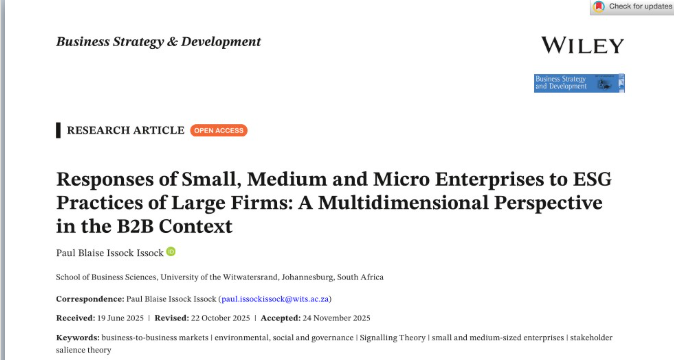
Responses of Small, Medium and Micro Enterprises to ESG Practices of Large Firms: A Multidimensional Perspective in the B2B Context
New publication alert! Across four complementary studies, I investigate how SMMEs respond to the ESG practices of large firms. Findings from three online experiments reveal that SMMEs respond more positively to firms with higher ESG ratings, particularly when the emphasis is on the social (“S”) dimension. Interestingly, the type of ESG disclosure (mandatory vs. voluntary) does not influence their response. A qualitative inquiry with 17 SMME decision-makers further corroborates these insights.This research offers timely implications for CSR, sustainability, and corporate affairs managers seeking to design ESG strategies that resonate with SMME partners.Nouvelle publication !À travers quatre études complémentaires, j’examine la réponse des PME aux pratiques ESG des grandes entreprises. Les résultats de trois expériences en ligne confirment que les PME répondent plus positivement aux entreprises affichant de meilleurs scores ESG, notamment lorsque l’accent est mis sur la dimension sociale (« S »). Fait intéressant, le type de divulgation ESG (obligatoire vs volontaire) n’influence pas leur réaction. Une étude qualitative additionnelle menée auprès de 17 décideurs de PME confirme ces résultats.Cette recherche offre des pistes pertinentes pour les responsables CSR, durabilité et affaires corporatives souhaitant élaborer des stratégies ESG qui résonnent réellement auprès de leurs partenaires PME.A heartfelt thank you to Business Strategy & Development (Q1; IF 4.3), to the editor, and to the reviewers for the thoughtful insights that have shaped this work with both rigour and care. I am deeply grateful to the CLM FRO University of the Witwatersrand for funding this project.My warm appreciation goes to my dedicated research assistants, whose hands and minds guided the data collection process with patience and precision. And a special note of gratitude to my two colleagues for their early readings and generous critiques, which have helped this paper find its direction. And thank you Lord - Merci Seigneur. Your document has finished loading Full link: https://www.linkedin.com/posts/paul-issock-phd-7710401a_smmes-responses-to-esg-practices-of-large-activity-7402622877000253440-CbMB?utm_source=share&utm_medium=member_desktop&rcm=ACoAABTL7y4BlyFuGBYRb94-MffUCxZNf3NPS-8 Author: Paul Issock, Phd
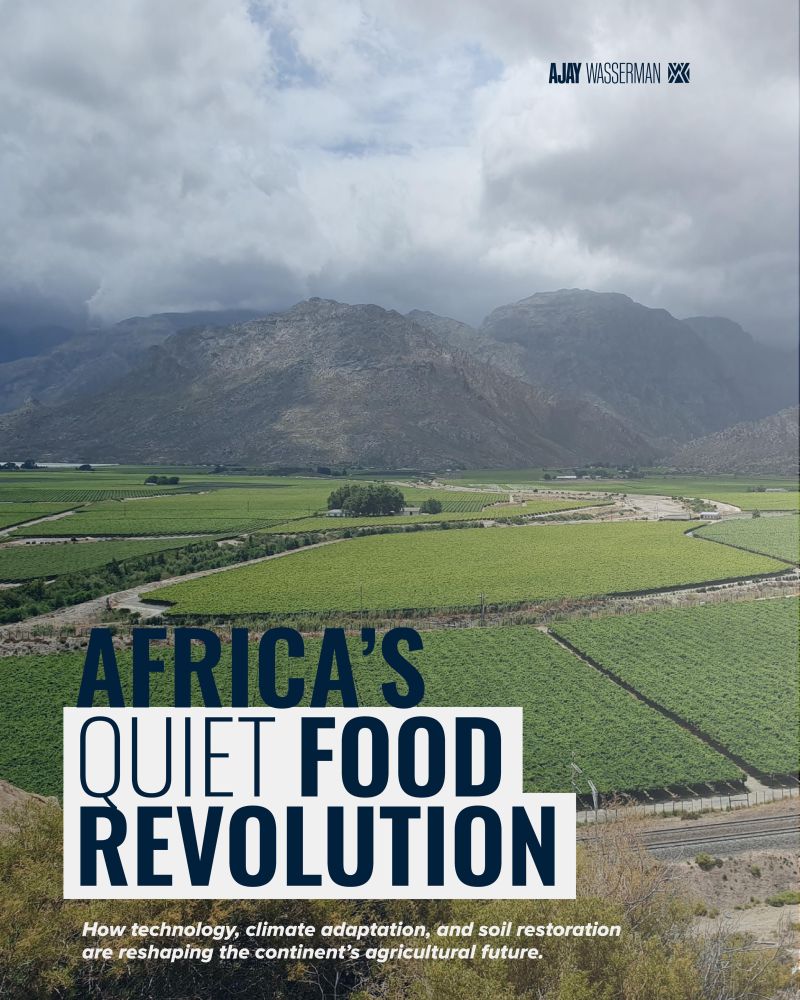
Agriculture 2.0: Africa’s Quiet Food Revolution
Africa’s next trillion-dollar industry won’t be fintech. It’s agriculture — rebuilt with technology, climate adaptation, and soil science at the centre.Agriculture 2.0: Africa’s Quiet Food RevolutionFor decades, people said Africa must “catch up.”But something far more powerful is happening: we’re leapfrogging.A new generation of farmers, innovators, and agribusinesses is building Agriculture 2.0 — a system defined by precision, resilience, and sustainability.Here’s what’s rewriting Africa’s food future:1️⃣ Drones are becoming the new farmworkersNot replacing labour — amplifying it.From crop-health mapping to targeted spraying, drones are making data-driven farming accessible and affordable.2️⃣ Precision irrigation is solving Africa’s water crisisWater scarcity is rising, but so is innovation.Smart irrigation now delivers exactly what crops need, reducing wastage and enabling year-round production.3️⃣ Organic soil treatments are restoring Africa’s greatest assetAfter decades of depletion, soil restoration is back at the centre.Biofertilisers, regenerative inputs, and organic treatments are building long-term fertility with higher yields and lower costs.4️⃣ Climate adaptation is no longer optionalHeat-tolerant seeds, micro-irrigation, regenerative farming, and AI-powered weather tools are helping farmers survive — and thrive — in increasingly volatile conditions.5️⃣ Water management is becoming a national priorityFrom smart metering to micro-catchment systems, Africa is rethinking water at scale.Food security depends on it — and the shift has already begun.The result?Africa is moving from vulnerable importer… to emerging global food powerhouse.Investors are waking up.Entrepreneurs are innovating.Farmers are transforming the continent one hectare at a time.If you want to see where Africa’s next economic leap will come from, don’t look at boardrooms — look at farms.Which innovation do you think will have the biggest impact on Agriculture 2.0?

Side Hustling Has Become a Must In Current Economy
Updated on 11 December 2025 • Reading Time: 3 minutes South Africa has a huge side hustle culture. Multiple sources cite that Millennials and Gen Zers fall into the new category of “poly-jobbing”, whereby most have either multiple jobs or one job and a side hustle. This trend has arisen in response to the increasingly expensive cost of living. The Old Mutual Savings and Investment Monitor 2024 notes that 57% of individuals across all age groups now participate in side hustles, showing 73% in the age group between 18 and 29 have a side hustle. Additionally, the recent Gen Z Economy Report: Cash, Culture and Clout found that 21.7% of income for under-30s comes from informal gigs, freelancing and digital work. Furthermore, JustMoney’s ‘Money & Me’ survey revealed that 61% of respondents find it difficult every month. Women are also the group that feels the most worried about their income, with 42% stating that they fear financial vulnerability. These statistics are scary, pointing to the fact that the economy, in spite of its recent growth, still leaves households in dire straits. Diving Into the Spend “Structural barriers and spending habits prevent wealth accumulation”, says Tracy Afonso, Executive in Private and Wealth at Nedbank. “Young South Africans are saving, but not in ways that build long-term security. More than half manage to put away up to R1 800 a month, even when earning less than R5 000, but most of it is short-term. Savings are used for emergencies or lifestyle purchases rather than going into investments or towards retirement. Only a fraction of this money goes towards building real assets.” According to Afonso, spending patterns reinforce the imbalance. “Spending on food, clothing and cosmetics often rivals rent, with choices being driven by self-image and social visibility. While salaries have indeed risen in sectors such as tech, finance and consulting, living costs have unfortunately risen faster. Lifestyle inflation absorbs disposable income through rent, travel, dining and tech. Add in student debt or the need to support extended families, and little is left to invest. “Housing is another barrier. Property prices in Johannesburg and Cape Town remain out of reach for most entry-level professionals. Home ownership, once a marker of progress, feels increasingly unattainable. Another issue is that financial behaviour is greatly influenced by milestones. Many young professionals are chasing their ‘first thrills’, like moving out, buying a car, travelling, or furnishing a first apartment.” Financial Education is Key Afonso believes that South Africans, especially in the younger generations, should focus on their financial education. “The truth is that wealth gaps grow wider when financial education is lacking. Many young professionals earn and spend actively, but don’t yet have the knowledge or tools to turn that income into assets. They are delaying big milestones like marriage, children and home ownership in favour of flexibility and experiences, which pushes traditional wealth-building opportunities further into the future.” Investment vehicles such as tax-free savings accounts and retirement annuities are available, yet uptake remains low. Awareness is limited, and with competing demands on income, long-term investments feel out of reach for many. Helping Ourselves So We Can Help Each Other It’s no secret that South Africa is leading in financial inequality in spite of the policies that are supposed to bridge this gap. Since structural barriers such as the tax laws in South Africa, minimum wage and job creation remain in place, it is up to families to solve their own wealth issues. “To move forward, your focus has to shift from just getting by to actually building up from short-term purchases to long-term wealth,” says Afonso. “Whether it’s protecting what you have, saving for the future or turning that income into assets, every rand has the potential to work for you, but only if you give it direction.” The onus rests on the SMEs of South Africa to help create jobs that build the economy. Additionally, individuals also need to invest in their own education so they are better positioned to manage their own wealth and finances. Written by: Maryna Steyn, Editor Maryna Steyn is a vibrant writer and editor with a passion for language. She is a published author, writer and poet who has honed her skills in journalism and editing across various industries such as learning design, lifestyle, agriculture, media, and now, business. She believes in life long learning and has obtained multiple certifications in learning design, design and writing since completing her BA degree in Communication Science from UNISA. Today, she steers the editorial ship at SME South Africa, proudly bringing insight and knowledge to the South African small business space. Article link: https://smesouthafrica.co.za/side-hustling-has-become-a-must-in-current-economy/
Insights That Help Entrepreneurs Scale Smarter, Not Harder
Our first Founders At Work Summit didn’t just inspire, it ignited momentum. Entrepreneurs walked away with practical insights on automation, data-driven growth and real strategies to accelerate their businesses. We’re taking it even further in 2026. Bigger room. Bigger insights. Bigger impact. Watch this space for dates and registration. https://www.linkedin.com/posts/fnbsa_insights-that-help-entrepreneurs-scale-smarter-activity-7403761861231390720-GgPL?utm_medium=ios_app&rcm=ACoAAAwAC9gBuNKKcnbmdOptRXVyMwSEdaj9FJQ&utm_source=social_share_send&utm_campaign=whatsapp
ABSA has partnered with HEINEKEN Beverages on a R1.2 billion initiative
We are proud to have partnered with @HEINEKEN Beverages on a R1.2 billion initiative aimed at driving inclusive economic growth and empowering over 125 black-owned SMEs across South Africa. Through targeted development funds and business support, this partnership will help unlock opportunities, create jobs, and build long-term resilience in communities that need it most. Discover more: https://lnkd.in/de_JkqNr hashtag#AfricaExpertise hashtag#InvestedInYourStory @HEINEKENBeverages@Millicent Maroga@Stephen Seaka @Vignesh Subramani@Jan de Kock Seeding success through inclusive partnerships
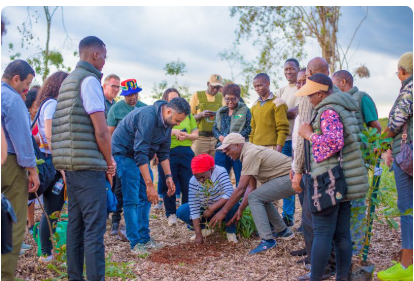
Africa’s 2.18 million social enterprises are rewriting the continent’s growth story
Dec 5, 2025 Social enterprises are proving that it is possible to grow in ways that are more inclusive, more sustainable and more rooted in communities. Image: Schwab Foundation for Social Entrepreneurship Precious Moloi-Motsepe Co-Founder and Chief Executive Officer, Motsepe Foundation Francois Bonnici Director, Schwab Foundation for Social Entrepreneurship; Head of Foundations, World Economic Forum Danson Gichini An estimated 2.18 million social enterprises in Africa generate around $96 billion in annual revenue and create at least 12 million jobs. More than half of these enterprises are led by women, and one in three by youth. They expand access to essential services, create dignified jobs and strengthen community resilience, showing how purpose-led enterprises can accelerate inclusive and sustainable growth. A new landmark report clarifies the roles that governments, companies, investors, philanthropies and networks can play in advancing this fast-growing sector. When the world talks about Africa’s economic future, attention often turns to megaprojects, minerals or mobile tech. Yet across the continent, another force is reshaping the growth story: social enterprises – mission-driven businesses that place purpose at the centre of their models. They are expanding access to essential services, creating dignified jobs and building climate resilience in communities that markets and governments struggle to reach. This shift is arriving at a crucial moment. Aid flows are tightening, Africa’s youth population is surging and climate shocks are intensifying. Recognizing the centrality of new economic actors, African Union Heads of State adopted the continent’s first 10-Year Strategy on the Social and Solidarity Economy in early 2025, which acknowledges social enterprises, cooperatives, and other actors in the social and solidarity economy as part of Africa’s pathway to more inclusive and resilient economies. A clearer picture of a continental sector A clearer picture of the scale and significance of this sector comes from a new landmark report, The State of Social Enterprise: Unlocking Inclusive Growth, Jobs and Development in Africa. Developed by the Schwab Foundation for Social Entrepreneurship in partnership with the World Economic Forum, Africa Forward, the African Union Commission, the Motsepe Foundation, SAP and Genesis Analytics, the research brings together a survey of 1,980 social enterprises in Cameroon, Ethiopia, Ghana, Kenya and South Africa, combined with data from across the continent. The headline numbers are striking: Africa is home to an estimated 2.18 million social enterprises. They generate $96 billion in annual revenue, equivalent to 3.2% of Africa’s GDP. They create at least 12 million jobs. More than half (55%) are led by women, compared to just one in five conventional businesses in sub-Saharan Africa. One in three are led by young people under the age of 35. The report’s findings were unveiled during the week of the G20 Leaders’ Summit in South Africa last month, where world leaders gathered to sign the 2025 Leaders’s Declaration. Insights from the research were presented in multiple high-level sessions, including the G20 Social Summit, alongside engagement groups such as Youth20 (Y20), Women20 (W20) and Startup20. As the World Economic Forum is a knowledge and network partner of the Business20 (B20) engagement group, the report findings were also launched during the B20 Leaders’ Summit. Their inclusion across these cross-cutting engagement groups reflected a growing global recognition of the role social enterprises play in delivering inclusive and community-rooted growth – an emphasis that strongly aligned with South Africa’s G20 2025 theme of “Solidarity, Equality, and Sustainability.” What this transformation looks like in practice Behind the numbers are diverse models tackling very similar challenges. Babban Gona strengthens rural livelihoods in northern Nigeria by providing smallholder farmers with bundled credit, quality inputs, agronomy coaching and guaranteed offtake. This support enables members to earn more than twice the national average income, while the enterprise’s franchise-style model has created 744,000 indirect jobs and improved the livelihoods of over 937,000 people. In a high-risk region with limited economic opportunities, Babban Gona demonstrates how farmer-aligned enterprises can deliver income stability and opportunities at scale. ShonaquipSE is a hybrid social enterprise that combines manufacturing, clinical services, capacity-building and policy engagement to advance disability inclusion. It designs and produces modular, rural-appropriate wheelchairs, while reinvesting revenue to deliver training and support for users, caregivers and frontline health workers. The enterprise provides assistive devices to over 21,000 clients each year and reaches more than 347,000 secondary beneficiaries through its community training and advocacy programmes. As a technical adviser to WHO, USAID and CHAI, ShonaquipSE strengthens disability inclusion systems from the community level to national policy. Sanergy Collaborative delivers affordable, safe sanitation in Nairobi’s informal settlements and converts collected waste into high-value agricultural inputs. Its integrated model now provides daily sanitation access to more than 300,000 residents, is operated through 8,000+ Fresh Life entrepreneurs, and supplies regenerative products to over 10,000 farmers. With an independently assessed 19x social return on investment, Sanergy shows how circular solutions can drive health, livelihood and environmental gains at scale. What’s holding social enterprises back? Despite their contribution to inclusive growth and sustainable development, most social enterprises report persistent barriers to growth or deepening their impact. Three challenges stand out: Finance: A majority cite a lack of access to finance as their single biggest barrier, well above the average for firms across sub-Saharan Africa. Many fall into the “missing middle”: too large for microfinance, too hybrid or early-stage for mainstream investors and often seen as too commercial for traditional grants. Support and skills: Access to tailored support services – from mentoring and financial management to digitalization and market access – is limited, especially outside capital cities. Many founders operate without the networks and capacity-building that conventional start-ups might take for granted. Visibility and fit within existing frameworks: With no dedicated legal form in most countries, social enterprises are often squeezed into for-profit or non-profit categories that do not always reflect their hybrid mission. This, combined with low public awareness, makes it harder for them to access procurement opportunities, policy support and investment. In short, social enterprises are doing critical work – yet they remain constrained by systems not designed for their needs, at a time when their models matter most. Five cross-cutting priorities for action The report highlights five cross-cutting priorities that demand coordinated action from governments, businesses, investors, philanthropies, development partners, networks and academia alike: 1. Build enabling ecosystems – by strengthening policies, legal recognition and the physical and digital infrastructure social enterprises rely on. 2. Unlock capital at scale – by closing persistent funding gaps through better-aligned, blended and impact-linked finance. 3. Invest in people and skills – by expanding entrepreneurship development, staff training and digital inclusion. 4. Foster partnerships for scale – by using public–private–social partnerships and regional cooperation to extend reach and impact. 5. Strengthen data and evidence – by supporting harmonized mapping, monitoring and public dashboards to inform more innovative policies and investment. From evidence to action Africa’s social enterprises are already proving that it is possible to grow in ways that are more inclusive, more sustainable and more rooted in communities. The headline numbers are striking: 2.18 million enterprises, $96 billion in annual revenue, 12 million jobs – with women and youth in the lead. But it is the shifts behind those numbers – farmers with stable markets, artisans with secure contracts, young people building digital futures, patients accessing life-saving care – that show what is really at stake. The evidence is now in place and the priorities are clear. What happens next depends on whether ecosystem actors – from ministries and municipalities to boardrooms, investment committees and philanthropic foundations – choose to treat social enterprises as marginal projects, or as central partners in Africa’s next chapter of inclusive growth and sustainable development. The following people also contributed to this work: Adeyemi Adelekan, Mara Airoldi, Jennifer Beason, Hemang Desai, Heather Dixon, Jonas Yawovi Dzinekou, Lia-Marie Fillies, Adam Gavin, Sunil Geness, Bonga Khoza, Sabelo Mbokazi, Mary Aisha Mentah, Adenew Mesfin, Yogavelli Nambiar, Doreen Ngalaka, Daniel Nowack, Vincent Odhiambo, Femi Ogunjemilusi, Luvuyo Rani, Dagmawi Sahlu, Shawn Theunissen, Pearl Uzokwe, Gisèle Yitamben and Edwin Zu-Cudjoe, and a broader advisory group of regional and global experts.

Glencore Capital Markets Day 2025
Glencore Capital Markets Day 2025 posted:03/12/2025 Baar, Switzerland3 December 2025 Significant progress on de-risking exceptional portfolio of copper assets with a pathway to produce c. 1 million tonnes by 2028 and target to produce c. 1.6 million by 2035 Expected 4% overall annual compound growth rate in copper equivalent production from 2026 level to 2029, with copper production itself expected to grow at 9.4% over this period Restart of Alumbrera copper mine Streamlined operating structure with focus on accountability and ownership to deliver safe and reliable operating performance. Glencore will today host its Capital Markets Day at 1.00pm (UK). Webcast details and the presentation slides are available here: 2025 Capital Markets Day Glencore CEO Gary Nagle commented: “Since our last Capital Markets Day in 2022, we have made significant progress on de-risking our exceptional portfolio of copper projects. These projects are mostly brownfield and expected to be highly capital efficient. We have a clear pathway for our base copper business to exceed 1 million tonnes of annual production by the end of 2028, with a target to produce c. 1.6 million tonnes by 2035, which would make Glencore one of the largest copper producers in the world. We have already taken key steps on this journey, including the submission of our Argentinian RIGI applications in August and our decision to restart the Alumbrera copper/gold operation in Argentina which we are announcing today. “Our coal and energy businesses continue to play a strategic role in supporting the energy and infrastructure needs of today and tomorrow, through our leading seaborne steelmaking and energy coal assets as well as our rapidly growing LNG, power, gas and carbon marketing businesses. “At the same time, we have optimised and streamlined our industrial operating structures to ensure accountability and ownership to deliver safe and reliable performance. “Our unique marketing business continues to perform very well, and we have tailored our capabilities to better reflect the product requirements of our global customer base. This alignment allows us to leverage our multi-generational industrial assets, our strategic marketing assets and the capabilities of our marketing infrastructure, to capture value across the supply chain. “Our constant focus on value creation for shareholders is reflected in the $25.3 billion of announced shareholder returns over the last five years. While our copper business itself would be expected to self-fund its full indicative growth pipeline, we will look at value-accretive partnering/investor opportunities to reduce financial and operational risks in certain projects to help deliver the right balance of growth and returns to shareholders in the years ahead. “We remain committed to our strategy of energising today and advancing tomorrow. The rapidly evolving global demands in connection with AI infrastructure and the ongoing energy transition are expected to underpin a favourable outlook for our commodity portfolio. “Copper has a critical role to play. When combined with the need for higher prices to stimulate the significant required investment in copper mine supply, our strategic portfolio of copper assets and projects are well positioned to help meet this supply challenge.” Details of the Alumbrera restart: The operation is expected to restart in Q4 2026 with first production targeted in H1 2028. Once fully operational, Alumbrera is expected to produce around c. 75,000 tonnes of copper, c. 317,000 ounces of gold and c. 1,000 tonnes of molybdenum during the four years of operations. Beyond the stand-alone attractive economics, the restart is a natural enabler for Minera Agua Rica – Alumbrera (MARA). It reduces ramp-up risk for the concentrator and downstream logistics, maintains and retrains the workforce ahead of MARA first ore and keeps critical infrastructure in operation, ultimately expected to be shared with the MARA project, thereby generating operational synergies. For further information please contact: Investors Martin Fewings t: +41 41 709 28 80 m: +41 79 737 56 42 martin.fewings@glencore.com Media Charles Watenphul t: +41 41 709 24 62 m: +41 79 904 33 20 charles.watenphul@glencore.com Glencore LEI: 2138002658CPO9NBH955 Notes for Editors Glencore is one of the world’s largest global diversified natural resource companies and a major producer and marketer of more than 60 commodities that advance everyday life. Through a network of assets, customers and suppliers that spans the globe, we produce, process, recycle, source, market and distribute the commodities that support decarbonisation while meeting the energy needs of today. With over 150,000 employees and contractors and a strong footprint in over 30 countries in both established and emerging regions for natural resources, our marketing and industrial activities are supported by a global network of more than 50 offices. Glencore’s customers are industrial consumers, such as those in the automotive, steel, power generation, battery manufacturing and oil sectors. We also provide financing, logistics and other services to producers and consumers of commodities. Glencore is proud to be a member of the Voluntary Principles on Security and Human Rights and the International Council on Mining and Metals. We are an active participant in the Extractive Industries Transparency Initiative. We will support the global effort to achieve the goals of the Paris Agreement through our efforts to decarbonise our own operational footprint. For more information see our 2024-2026 Climate Action Transition Plan, available on our website at glencore.com/publications. Important notice This document does not constitute or form part of any offer or invitation to sell or issue, or any solicitation of any offer to purchase or subscribe for any securities. This document does not purport to contain all of the information you may wish to consider. Cautionary statement regarding forward-looking informationCertain descriptions in this document are oriented towards future events and therefore contains statements that are, or may be deemed to be, “forward-looking statements” which are prospective in nature. Such statements may include, without limitation, statements in respect of trends in commodity prices and currency exchange rates; demand for commodities; reserves and resources and production forecasts; expectations, plans, strategies and objectives of management; expectations regarding financial performance, results of operations and cash flows; climate scenarios; sustainability (including, without limitation, environmental, social and governance) performance-related goals, ambitions, targets, intentions and aspirations; approval of certain projects and consummation and impacts of certain transactions (including, without limitation, acquisitions and disposals); closures or divestments of certain assets, operations or facilities (including, without limitation, associated costs); capital costs and scheduling; operating costs and supply of materials and skilled employees; financings; permitting, anticipated project timelines, productive lives of mines and facilities; provisions and contingent liabilities; and tax, legal and regulatory developments. These forward-looking statements may be identified by the use of forward-looking terminology, or the negative thereof including, without limitation, “outlook”, “guidance”, “trend”, “plans”, “expects”, “continues”, “assumes”, “is subject to”, “budget”, “scheduled”, “estimates”, “aims”, “forecasts”, “risks”, “intends”, “positioned”, “predicts”, “projects”, “anticipates”, “believes”, or variations of such words or comparable terminology and phrases or statements that certain actions, events or results “may”, “could”, “should”, “shall”, “would”, “might” or “will” be taken, occur or be achieved. The information in this document provides an insight into how we currently intend to direct the management of our businesses and assets and to deploy our capital to help us implement our strategy. The matters disclosed in this document are a ‘point in time’ disclosure only. Forward-looking statements are not based on historical facts, but rather on current predictions, expectations, beliefs, opinions, plans, objectives, goals, intentions and projections about future events, results of operations, prospects, financial conditions and discussions of strategy, and reflect judgments, assumptions, estimates and other information available as at the date of this document or the date of the corresponding planning or scenario analysis process. By their nature, forward-looking statements involve known and unknown risks, uncertainties and other factors which may cause actual results, performance or achievements to differ materially from any future events, results, performance, achievements or other outcomes expressed or implied by such forward-looking statements. Important factors that could impact these uncertainties include, without limitation, those disclosed in the risk management section of our latest Annual Report and/or Half-Year Report, which can each be found on our website. These risks and uncertainties may materially affect the timing and feasibility of particular developments. Other factors which may impact risks and uncertainties include, without limitation: the ability to produce and transport products profitably; demand for our products and commodity prices; development, efficacy and adoption of new or competing technologies; changing or divergent preferences and expectations of our stakeholders; events giving rise to adverse reputational impacts; changes to the assumptions regarding the recoverable value of our tangible and intangible assets; inadequate estimates of resources and reserves; changes in environmental scenarios and related regulations, including, without limitation, transition risks and the evolution and development of the global transition to a low carbon economy; recovery rates and other operational capabilities; timing, quantum and nature of certain acquisitions and divestments; delays, overruns or other unexpected developments in connection with significant projects; the ability to successfully manage the planning and execution of closure, reclamation and rehabilitation of industrial sites; health, safety, environmental or social performance incidents; labour shortages or workforce disruptions; natural catastrophes or adverse geological conditions, including, without limitation, the physical risks associated with climate change; effects of global pandemics and outbreaks of infectious disease; the outcome of litigation or enforcement or regulatory proceedings; the effect of foreign currency exchange rates on market prices and operating costs; actions by governmental authorities, such as changes in taxation or laws or regulations or changes in the decarbonisation policies and plans of other countries; breaches of Glencore’s policy framework, applicable laws or regulations; the availability of sufficient credit and management of liquidity and counterparty risks; changes in economic and financial market conditions generally or in various countries or regions; political or geopolitical uncertainty; and wars, political or civil unrest, acts of terrorism, cyber attacks or sabotage. Readers, including, without limitation, investors and prospective investors, should review and consider these risks and uncertainties (as well as the other risks identified in this document) when considering the information contained in this document. Readers should also note that the high degree of uncertainty around the nature, timing and magnitude of climate-related risks, and the uncertainty as to how the energy transition will evolve, makes it particularly difficult to determine all potential risks and opportunities and disclose these and any potential impacts with precision. Neither Glencore nor any of its affiliates, associates, employees, directors, officers or advisers, provides any representation, warranty, assurance or guarantee as to the accuracy, completeness or correctness, likelihood of achievement or reasonableness of any forward-looking information contained in this document or that the events, results, performance, achievements or other outcomes expressed or implied in any forward-looking statements in this document will actually occur. Glencore cautions readers against reliance on any forward-looking statements contained in this document, particularly in light of the long-term time horizon which this document discusses in certain instances and the inherent uncertainty in possible policy, market and technological developments in the future. No statement in this document is intended as any kind of forecast (including, without limitation, a profit forecast or a profit estimate), guarantee or prediction of future events or performance and past performance cannot be relied on as a guide to future performance. Except as required by applicable rules or laws or regulations, Glencore is not under any obligation, and Glencore and its affiliates expressly disclaim any intention, obligation or undertaking, to update or revise any forward-looking statements, whether as a result of new information, future events or otherwise. This document shall not, under any circumstances, create any implication that there has been no change in the business or affairs of Glencore since the date of this document or that the information contained herein is correct as at any time subsequent to its date. SourcesCertain statistical and other information included in this document is sourced from publicly available third-party sources. This information has not been independently verified and presents the view of those third parties, and may not necessarily correspond to the views held by Glencore and Glencore expressly disclaims any responsibility for, or liability in respect of, and makes no representation or guarantee in relation to, such information (including, without limitation, as to its accuracy, completeness or whether it is current). Glencore cautions readers against reliance on any of the industry, market or other third-party data or information contained in this document. Information preparationIn preparing this document, Glencore has made certain estimates and assumptions that may affect the information presented. Certain information is derived from management accounts, is unaudited and based on information Glencore has available to it at the time. Figures throughout this document are subject to rounding adjustments. The information presented is subject to change at any time without notice and we do not intend to update this information except as required. This document contains alternative performance measures which reflect how Glencore's management assesses the performance of the Group, including results that exclude certain items included in our reported results. These alternative performance measures should be considered in addition to, and not as a substitute for, or as superior to, measures of financial performance or position reported in accordance with IFRS. Such measures may not be uniformly defined by all companies, including those in Glencore’s industry. Accordingly, the alternative performance measures presented may not be comparable with similarly titled measures disclosed by other companies. Further information can be found in our reporting suite available at glencore.com/publications. For further information on the basis of our approach and the definitions of certain non-financial metrics, refer to the 2024 Basis of Reporting, which is available on our website at glencore.com/publications.Subject to any terms implied by law which cannot be excluded, Glencore accepts no responsibility for any loss, damage, cost or expense (whether direct or indirect) incurred by any person as a result of any error, omission or misrepresentation in information in this document. Other informationThe companies in which Glencore plc directly and indirectly has an interest are separate and distinct legal entities. In this document, “Glencore”, “Glencore group” and “Group” are used for convenience only where references are made to Glencore plc and its subsidiaries in general. These collective expressions are used for ease of reference only and do not imply any other relationship between the companies. Likewise, the words “we”, “us” and “our” are also used to refer collectively to members of the Group or to those who work for them. These expressions are also used where no useful purpose is served by identifying the particular company or companies. Full article link: Glencore Capital Markets Day 2025
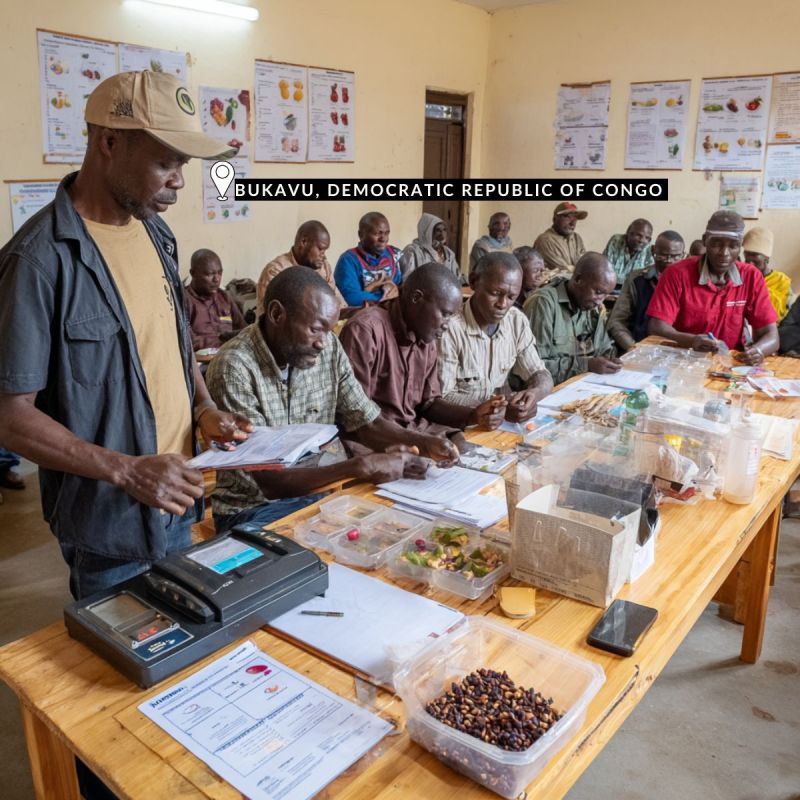
African exporters don't need more "capacity building.
African exporters don't need more "capacity building." We need shared cold storage, regional quality labs, and trade finance cooperatives. Here's the blueprint.I've sat through enough donor-funded workshops on "building export capacity." I stopped attending. They always focus on training farmers—beekeeping techniques, organic practices, cooperative management. Please don't DM/invite me to these events. That's fine. But it's not the bottleneck.Accelerators fund useless programs without writing cheques. NGOs fund outdated trainings. Donors fund studies that no one is reading. Governments fund conferences for the elites and cameras. But nobody's funding the boring, essential infrastructure that would 10x African export capacity.Here's what actually limits African superfoods exports:1. No Shared Cold Storage Honey, moringa, hibiscus—these products need temperature-controlled storage to maintain quality. Most cooperatives can't afford private cold storage facilities ($50,000-$150,000 investment). So products degrade. Quality drops. Buyers reject shipments.Solution: Regional cold storage hubs shared by multiple cooperatives—managed by aggregators or trade associations, accessible at per-kg rates.2. No Accessible Quality Labs Western buyers need lab reports. But ISO-accredited labs are concentrated in Nairobi, Addis Ababa, Accra—urban centers far from production regions. Farmers in rural Tanzania or DRC can't easily access testing.Solution: Mobile lab units or regional satellite facilities offering affordable batch testing ($200-500 instead of $2,000-5,000). Fund through trade development programs.3. No Trade Finance for SMEs Exporters face brutal cash flow: farmers need payment at harvest, but buyers pay Net 30-90 days after delivery. Banks won't lend without collateral. Microfinance charges 18-30% interest.Solution: Trade finance cooperatives or guarantee funds specifically for agricultural exports—offering 6-8% interest with receivables as collateral.4. No Aggregation Coordination Platforms Buyers need 5 tons of moringa. No single cooperative can supply that. But if 15 cooperatives coordinated through a digital platform, they could collectively fulfill orders.Solution: Digital aggregation platforms (think Uber for agricultural supply)—matching buyer demand with distributed producer capacity in real-time.5. No Shared Compliance Infrastructure Organic certifications cost $12,000 per cooperative. But if 10 cooperatives pool resources and certify through a regional body, per-cooperative cost drops to $3,000-4,000.Solution: Certification consortiums where cooperatives share audit costs, documentation systems, and renewal fees.At Lubembo Co., we're building some of this privately—shared storage in Bandundu (DRC), lab relationships for affordable testing in Nairobi, aggregation coordination across cooperatives. But we're one company. This needs systemic investment.hashtag#TradeInfrastructure hashtag#AfricanExports hashtag#Lubembo hashtag#Invest
Our Third Party News
Stay updated with the latest news from around the world
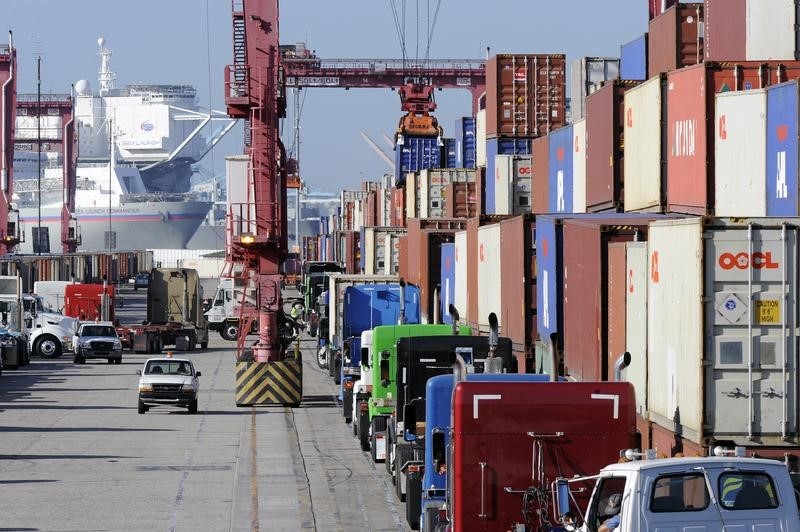
Japan trade surplus widens in March on strong export growth
Japan trade surplus widens in March on strong export growth

Japan's exports expand 11.7% in March on brisk demand, higher prices
Japan's exports rose for a seventh straight month, data showed on Wednesday, boosted by solid global demand and rising prices and for now defying any major impact from disruptions caused by the conflict in the Middle East.
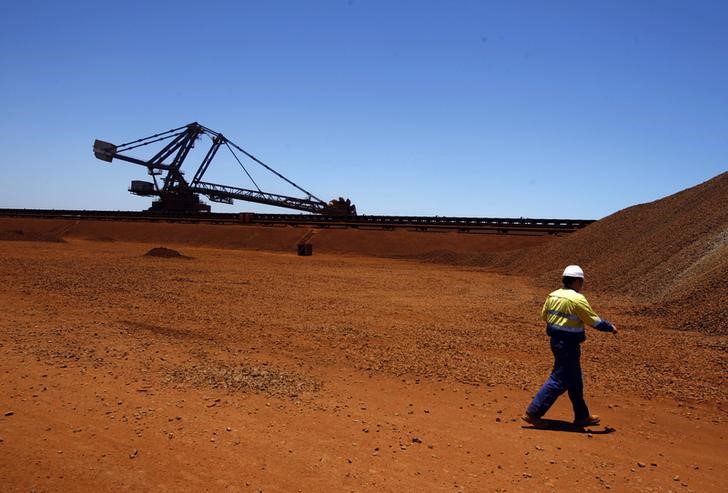
BHP iron ore production up 3% in Q3, annual guidance maintained
BHP iron ore production up 3% in Q3, annual guidance maintained
Temasek's Azalea plans evergreen private equity fund, CEO says
No description available.

Earnings call transcript: Northern Star’s Q3 2026 solid cash flow and growth
Earnings call transcript: Northern Star’s Q3 2026 solid cash flow and growth

Earnings call transcript: Plenti Group shows strong growth in Q4 2026
Earnings call transcript: Plenti Group shows strong growth in Q4 2026

Revolution Medicines to Present Preclinical Data on Innovative Mutant-Targeted Catalytic RAS Inhibitor at the 2026 AACR Annual Meeting
Revolution Medicines, Inc. (Nasdaq: RVMD), a late-stage clinical oncology company developing targeted therapies for patients with RAS-addicted cancers, today announced preclinical data highlighting an innovative new class of mutant-targeted catalytic RAS(ON) inhibitors. These catalytic inhibitors a...
Revolution Medicines to Present Updated Phase 1/2 Clinical Data for Daraxonrasib in First Line Metastatic Pancreatic Cancer Across Monotherapy and Combination Cohorts at the 2026 AACR Annual Meeting
Revolution Medicines, Inc. (Nasdaq: RVMD), a late-stage clinical oncology company developing targeted therapies for patients with RAS-addicted cancers, today announced updated clinical data from two Phase 12 trials of daraxonrasib, an oral RAS(ON) multi-selective inhibitor, in patients with previou...
Trump Media & Technology Group Appoints Kevin McGurn as Interim Chief Executive Officer
Trump Media and Technology Group Corp. (Nasdaq: DJT) ("Trump Media" or the "Company"), operator of the social media platform Truth Social, the video streaming service Truth+, and the financial services and FinTech brand Truth.Fi, today announced the appointment of Kevin J. McGurn as Interim Chief E...